For Fit notes and medication queries please use this link to access questionnaires which will help us to check if it is safe and appropriate to continue prescribing. There are specific questionnaires for pill checks, HRT reviews and medications for anxiety and depression. If you require any other medication please select the medication query option.

Codeine: what you need to know
How we prescribe codeine at Murton Medical Group
For most people, we prescribe codeine for short-term pain only, usually for a few days.
Codeine is not usually added to repeat prescriptions. A small number of patients may take it longer term when other treatments aren't suitable. This is decided by a clinician and reviewed regularly.
If you're still in pain after a short course, that doesn't mean you need more codeine. It means we need a different plan, so please book a review.
Requests for further codeine will be passed to a clinician and may need an appointment first.
If you take codeine regularly, we will invite you for regular reviews to check it is still helping and still safe for you.
We know living with pain is hard. Our aim is to help you manage your pain and do more of what matters to you, safely.
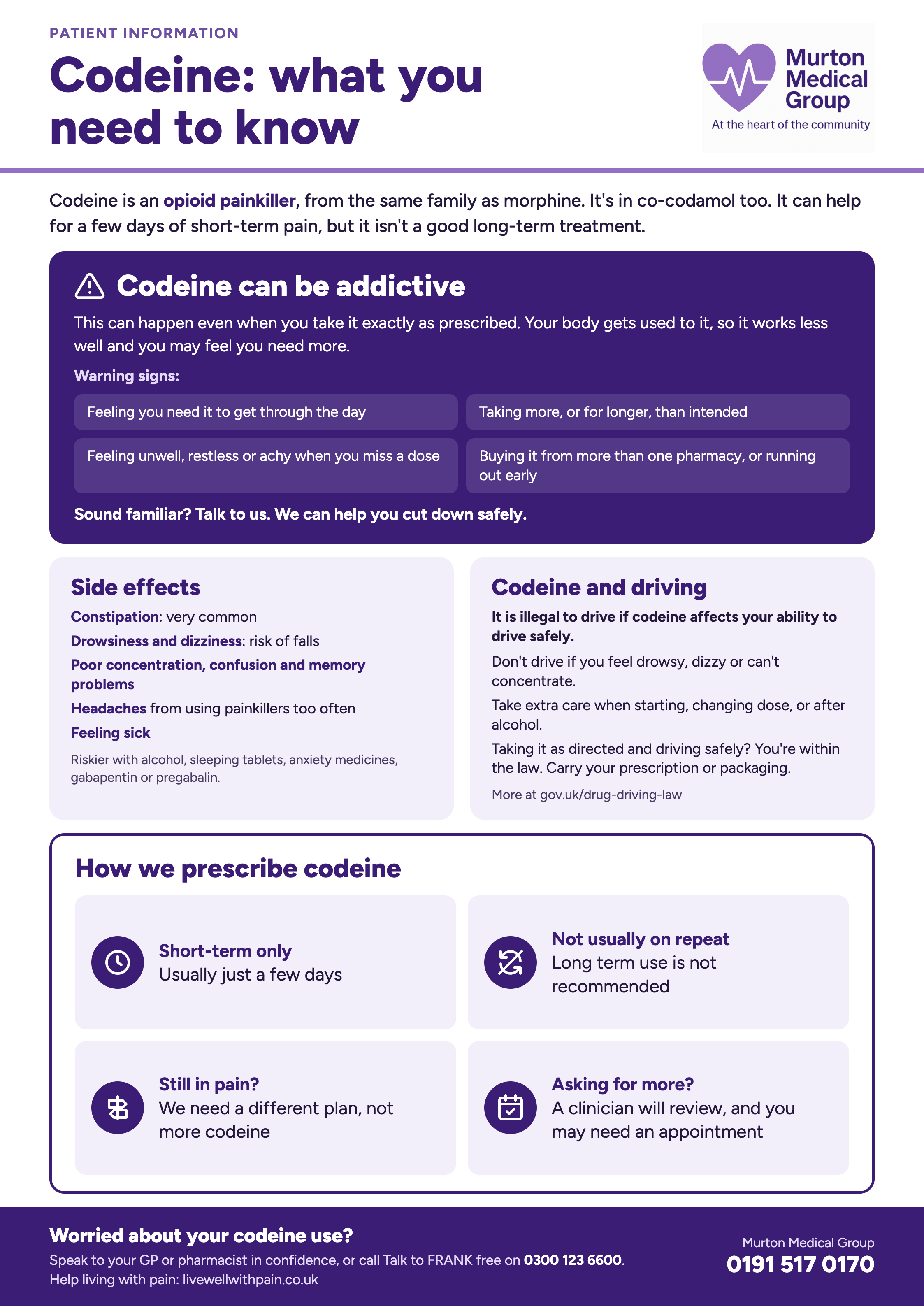
Codeine is a painkiller from the opioid family, the same family of medicines as morphine. It's found on its own and in combination painkillers such as co-codamol. Some of these are available to buy from pharmacies, while stronger versions are prescription only.
Codeine can be useful for a few days of short-term pain, but it isn't a good long-term treatment, and it carries real risks.
Codeine can be addictive
Codeine can cause addiction, even when taken exactly as prescribed. Over time, your body gets used to it, so it works less well and you may feel you need more to get the same effect. Some people find it hard to stop because they feel unwell when they try.
Signs you may be becoming dependent on codeine include:
- Feeling you need it to get through the day
- Taking more than the recommended dose, or taking it for longer than intended
- Feeling restless, anxious, achy or unwell when you stop or miss a dose
- Buying it from more than one pharmacy, or running out early
If any of this sounds familiar, please talk to us. We won't judge you, and we can help you reduce it safely. Don't stop suddenly if you've been taking it for a long time.
Other side effects
- Constipation: very common. Drink plenty of fluids and speak to your pharmacist about a laxative if needed.
- Drowsiness and dizziness: these can increase your risk of falls, especially in older people.
- Poor concentration, confusion and memory problems: these are more likely with higher doses, longer use, or in older people.
- Headaches: taking painkillers regularly for headaches can cause "medication overuse headache", making them worse.
- Feeling sick.
The risks are higher if codeine is taken with alcohol or with other medicines that cause drowsiness, such as some sleeping tablets, anxiety medicines and nerve pain medicines like gabapentin and pregabalin.
Codeine and driving
In the UK, it is illegal to drive if any medicine, including codeine, affects your ability to drive safely. Police can carry out roadside checks.
- Don't drive if you feel drowsy, dizzy, or unable to concentrate.
- Take extra care when you first start codeine, when your dose changes, or if you've drunk alcohol.
- If you're taking codeine as prescribed or as directed by your pharmacist, and it isn't affecting your driving, you are not breaking the law. It's sensible to keep your prescription or the medicine packaging with you as evidence.
If you're not sure whether it's safe to drive, ask your pharmacist or GP. More information is available at gov.uk/drug-driving-law.
Other help for pain
- Regular paracetamol, and anti-inflammatory medicines where suitable (ask your pharmacist)
- Staying active, and exercises or physiotherapy
- Heat or ice packs
- Live Well with Pain: livewellwithpain.co.uk
- Talk to us about local services such as physiotherapy, social prescribing or talking therapies
Worried about your codeine use?
Speak to your GP or pharmacist in confidence. You can also contact Talk to FRANK for free, confidential advice on 0300 123 6600 or at talktofrank.com.